
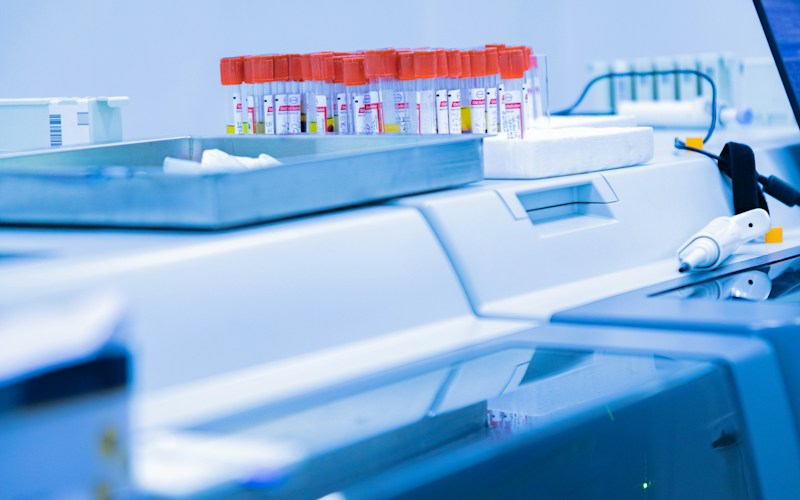
Public health laboratory testing turns specimens, environmental samples, and surveillance data into evidence that helps communities detect threats, investigate outbreaks, and protect health. This beginner’s guide explains what these laboratories do, how a result moves from collection to action, and where the limits lie.
Key Points
- Public health laboratories protect populations. Their work supports surveillance, outbreak response, emergency preparedness, screening programs, and policy decisions.
- A reliable result depends on the full testing system, including the collection method, transport conditions, chain of custody, controls, validated methods, data review, and communication.
- Testing may use culture, microscopy, immunoassays, polymerase chain reaction, sequencing, mass spectrometry, and chemical analysis, depending on the question.
- Public health and clinical laboratories often collaborate, but their primary decisions differ. A clinical laboratory usually helps care for an individual patient, while a public health laboratory looks for patterns and risks across communities.
- A laboratory result is one part of a public health decision. Epidemiology, exposure history, case definitions, prevalence, and local context shape interpretation.
What Is a Public Health Laboratory?
A public health laboratory is a laboratory within a governmental or closely connected public health system that provides testing and scientific support for population health. In the United States, the network includes state, local, territorial, tribal, and federal laboratories. These laboratories work with hospitals, clinical laboratories, environmental programs, animal-health agencies, emergency responders, and epidemiologists.
The Association of Public Health Laboratories describes a broad set of core functions that includes disease prevention and surveillance, emergency response, environmental health, food safety, laboratory improvement, policy development, training, and research. The practical mix varies by jurisdiction. A state laboratory may confirm an unusual pathogen submitted by a hospital, sequence bacterial isolates from several counties, test drinking water after a flood, and maintain surge capacity for a chemical emergency.
Public Health Testing Compared With Clinical Testing
A clinical laboratory generally answers a patient-centered question such as whether a person has a particular infection. A public health laboratory may confirm that result, characterize the organism, compare it with other cases, and help determine whether the cases belong to the same outbreak. The systems overlap, and many public health decisions begin with information supplied by clinical laboratories.
What Public Health Laboratories Test
| Area | Example Question | Common Laboratory Approaches |
|---|---|---|
| Infectious diseases | Is an outbreak occurring, and are cases connected? | Culture, antigen testing, nucleic acid amplification, antimicrobial susceptibility testing, and whole-genome sequencing |
| Newborn screening | Does a newborn show a marker for a serious condition that benefits from early follow-up? | Biochemical assays, tandem mass spectrometry, molecular methods, and confirmatory referrals |
| Environmental health | Does water, soil, or air contain a biological, chemical, or radiological hazard? | Microbiology, chromatography, mass spectrometry, spectroscopy, and radiochemistry |
| Foodborne disease | Do patient isolates or food samples share a pathogen strain? | Culture, identification, serotyping, and whole-genome sequencing |
| Emergency response | Could an unknown sample contain a high-consequence biological or chemical agent? | Presumptive screening, confirmatory assays, secure referral networks, and specialized methods |
| Population surveillance | How is a pathogen, resistance marker, or exposure changing across a region? | Sentinel sampling, molecular testing, sequencing, data aggregation, and trend analysis |
How the Testing Workflow Works
Specify the health decision, target, population, and reporting need.
Use the correct container, timing, temperature, labeling, and documentation.
Run the approved method with positive, negative, and process controls as applicable.
Check control performance, instrument data, plausibility, and reporting rules.
Communicate through the appropriate channel and connect results with epidemiology.
The workflow begins before a sample reaches the bench. The requester and laboratory must agree on the testing purpose, acceptable specimen, collection window, transport conditions, and information needed for interpretation. A technically excellent assay cannot recover information lost through poor sampling or improper transport.
At receipt, staff confirm identifiers, specimen type, condition, and acceptance criteria. Testing then proceeds under documented procedures with quality controls. Qualified personnel review raw and processed data, resolve flags, and release results through secure reporting systems. Urgent findings may trigger immediate notification to epidemiologists, health officers, clinicians, or response partners.
A Concrete Example: Connecting Foodborne Illness Cases
Consider several people in different counties who develop similar gastrointestinal illness. Local clinical laboratories culture a bacterial pathogen from patient specimens and submit isolates, or sequence data, to the state public health laboratory. The public health laboratory confirms the organism and performs whole-genome sequencing, a method that reads the organism’s DNA at high resolution.
Bioinformatic analysis compares the sequences. Closely related isolates can support the hypothesis that cases share a source, although laboratory similarity alone does not prove where exposure occurred. Epidemiologists interview patients about foods, restaurants, travel, and timing. Food and environmental investigators may collect additional samples. Through CDC’s PulseNet network, authorized laboratories can compare patterns across jurisdictions and identify a wider cluster.
The useful output is therefore larger than a single positive result. It is the connection between standardized laboratory data, case information, and coordinated investigation. A sequence cluster can guide action, but public health teams still need epidemiologic and traceback evidence before naming a source or recommending a control measure.
Methods Beginners Should Know
Culture and Microscopy
Culture grows microorganisms under controlled conditions so they can be identified and characterized. It can also provide an organism for susceptibility testing or sequencing. Microscopy allows direct observation of cells, organisms, or structures. These methods remain important even when faster molecular tests are available.
Immunoassays
Immunoassays use antigen-antibody binding to detect a target or an immune response. They can be rapid and practical, but their performance depends on the target, specimen, timing, and intended use.
Polymerase Chain Reaction
Polymerase chain reaction, or PCR, amplifies selected genetic material so a target can be detected. Reverse-transcription PCR first converts RNA to DNA. A positive molecular signal may identify target material, but interpretation still depends on method design, controls, specimen quality, and the clinical or surveillance context.
Whole-Genome Sequencing
Whole-genome sequencing, or WGS, reads much or all of an organism’s genome. Public health programs use it to compare isolates, investigate transmission, monitor variants, and study resistance. Sequencing quality, reference databases, analytic pipelines, and epidemiologic context all affect the conclusion.
Chemical and Instrumental Analysis
Chromatography and mass spectrometry can separate and identify chemicals in environmental, food, or human samples. Other programs use spectroscopy, radiochemistry, or tandem mass spectrometry. The chosen method must fit the substance, matrix, required reporting limit, and regulatory purpose. LabPress’s guide to choosing analytical instruments by method, matrix, and detection limit explains that matching process.
Quality, Regulation, and Biosafety
Quality is a system, not a final inspection. Laboratories use documented methods, training and competency programs, equipment maintenance, calibration or verification, reagent controls, proficiency testing, corrective actions, record review, and continual improvement. Some U.S. public health laboratory testing of human specimens falls under the Clinical Laboratory Improvement Amendments, commonly called CLIA. Other work may follow environmental, food, occupational, emergency-response, or program-specific requirements.
Biosafety practices depend on the hazards and procedures. Risk assessment considers the agent, specimen, route of exposure, aerosol-generating steps, equipment, facility, and staff competency. High-consequence agents may require secure packaging, restricted workflows, and referral through networks such as the Laboratory Response Network.
Common Misconceptions
“Public Health Laboratories Only Test During Outbreaks”
Routine surveillance, newborn screening, environmental monitoring, quality improvement, training, and preparedness continue between emergencies. Sustained baseline work is what makes unusual patterns visible.
“A Positive Result Explains the Entire Event”
A positive result can identify a target in a particular sample. Determining source, route, timing, and population risk usually requires epidemiology and additional evidence.
“Faster Is Always Better”
Turnaround time matters, especially during an emergency. The fastest method may serve as a screen that requires confirmation, or it may provide less characterization than culture or sequencing. The right method balances urgency with the decision the result must support.
“Every Laboratory Uses the Same Test”
Capabilities, mandates, specimen volumes, instruments, and referral relationships vary. Standardized networks improve comparability, yet laboratories still validate methods for their intended use and operate within their authorized scope.
Practical Takeaways for New Laboratory Professionals
- Learn the public health question before focusing on the instrument.
- Treat collection, transport, identifiers, and metadata as part of the test.
- Understand what each control proves and what it cannot prove.
- Escalate unusual findings through the laboratory’s documented communication pathway.
- Separate analytical evidence from epidemiologic conclusions.
- Document deviations, uncertainty, and limitations clearly enough for the next decision-maker.
Readers building a broader foundation can also review What Is Life Science Research?, What Is Agricultural and Animal Health Testing?, and LabPress’s laboratory automation planning guide.
Frequently Asked Questions
Who uses public health laboratory results?
Epidemiologists, clinicians, environmental health programs, regulators, emergency responders, health officers, researchers, and community partners may use the results. Access and reporting pathways depend on the program and applicable law.
Does a public health laboratory diagnose individual patients?
Some public health laboratories perform clinical testing or confirmatory testing on human specimens, and those activities may directly support patient care. Their broader mandate also includes surveillance and population-level response.
What is the Laboratory Response Network?
The Laboratory Response Network, or LRN, is a coordinated U.S. network that links public health and partner laboratories for detection and response to biological, chemical, and other threats. It uses defined roles, methods, and referral pathways.
Why is specimen information important?
Collection date, specimen type, location, symptoms, exposure history, and other metadata help determine whether the sample is suitable and how the result should be interpreted. Missing context can reduce the result’s value.
Sources and Further Reading
- Centers for Disease Control and Prevention: Introduction to Public Health Laboratories
- Association of Public Health Laboratories: About Public Health Laboratories
- Association of Public Health Laboratories: Core Functions and Capabilities
- CDC: Laboratory Response Network
- CDC: PulseNet
- CDC: Advanced Molecular Detection
- CDC: Clinical Laboratory Improvement Amendments
Keep Exploring
Related Reading
What Is Contract Laboratory Testing?
A beginner’s guide to choosing and working with contract testing laboratories, from scope and sample handoff to quality agreements,…Read Article
What Is Academic Laboratory Research?
A beginner’s guide to academic research laboratories, from questions, controls, and team roles to oversight, data stewardship, limitations, and…Read Article



Leave a Reply