
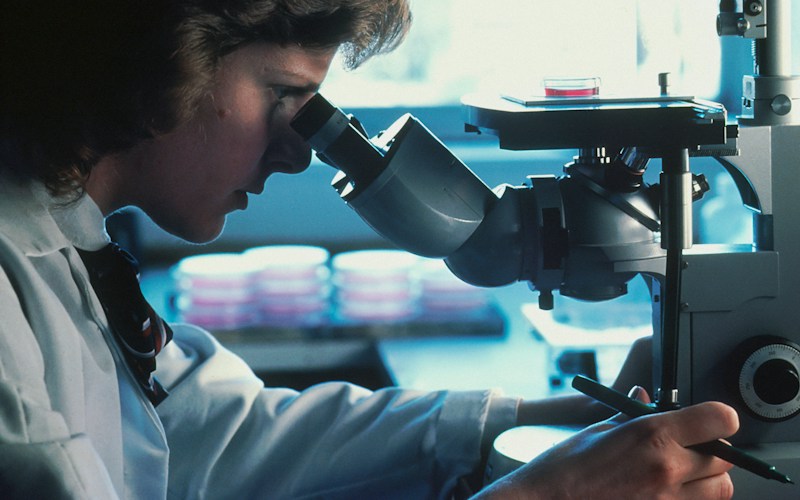
Life science research is the systematic study of living organisms, their components, and the processes that connect genes, cells, tissues, organisms, populations, and ecosystems. In a laboratory, that broad ambition becomes a practical sequence: ask a focused question, choose a suitable biological model, design controls, make observations, analyze the data, and explain what the evidence can support.
Key Points
- Life science includes fields such as molecular biology, cell biology, genetics, microbiology, neuroscience, ecology, biotechnology, and biomedical science.
- Basic research seeks to understand living systems, while applied and translational work use knowledge to address defined problems.
- A strong experiment begins with the biological question and decision, followed by the model, controls, measurements, and analysis plan.
- Controls, replication, randomization, blinding where feasible, and transparent reporting help limit bias and make results more trustworthy.
- A model provides an informative representation of biology. It does not reproduce every feature of a whole organism or real-world setting.
What Life Science Research Means
Life science research builds explanations about living systems from observations and experiments. It can be descriptive, such as cataloging which genes are active in a cell type; mechanistic, such as asking how a receptor changes cell behavior; or predictive, such as testing whether a model can forecast a biological response.
The term life science laboratory describes the controlled environment, people, instruments, materials, computational systems, and procedures used to conduct this work. The laboratory may be a wet lab handling biological samples, a computational group analyzing sequence data, a field station studying organisms in their environment, or a connected program that combines all three.
Major Types Of Life Science Research
Basic Research
Basic research explores fundamental mechanisms of biology, disease, or behavior. A project might investigate how a protein folds, how cells repair DNA, or how microbes exchange genes without starting from a specific commercial product.
Applied Research
Applied research uses biological knowledge to solve a defined problem. Examples include improving an enzyme for manufacturing, developing a crop trait, optimizing a diagnostic assay, or identifying a useful biomarker.
Translational Research
Translational work connects discoveries with interventions, tools, or practices that can improve health or another outcome. The pathway is iterative: clinical and community observations can generate new laboratory questions as readily as laboratory results can motivate later studies.
Observational And Computational Research
Some projects analyze naturally occurring variation, existing records, images, genomes, or ecological measurements without manipulating an experimental system. Strong design and validation remain essential because patterns can reflect bias, confounding, or data quality.
From A Broad Idea To A Testable Question
“How do cells respond to stress?” is a useful area of interest, but it is too broad for one experiment. A testable question identifies the system, factor, measurement, and comparison. For example: “In this cultured human cell model, does reducing receptor R change the expression of three predefined inflammatory-response genes after a defined stimulus?”
The question determines what comes next. Researchers must decide which cell line or organism can address it, how the factor will be changed, what result will count as evidence, and which alternative explanations require controls. Instrument shopping before these decisions can produce a sophisticated setup that measures the wrong thing.
The Core Life Science Research Workflow
- Define The Question. Review relevant evidence, identify the knowledge gap, and write a focused objective or hypothesis. Exploratory studies can begin with a broader objective, provided that the analysis is described honestly.
- Choose The Biological Model. Select cells, tissues, organisms, specimens, datasets, or simulations that can answer the question. Consider biological relevance, variability, availability, ethics, safety, and the limits of generalizing from the model.
- Design Comparisons And Controls. Identify the experimental group, comparison group, positive and negative controls, technical controls, sample size, replicate structure, inclusion criteria, and plan for assigning samples to conditions.
- Plan Measurements And Analysis. Define primary and secondary outcomes, time points, instruments, calibration or quality checks, data exclusions, and statistical methods before results can influence those choices.
- Run The Experiment. Follow documented procedures, track materials and sample identity, monitor environmental and instrument conditions, record deviations, and preserve raw data with the metadata needed for interpretation.
- Evaluate Data Quality. Review controls, missing data, assay performance, images, instrument files, and protocol departures. An unexpected control result may invalidate a run even when the experimental values look interesting.
- Analyze And Interpret. Estimate the size and uncertainty of observed effects, test planned comparisons, examine whether assumptions were met, and separate direct evidence from speculation.
- Confirm And Communicate. Repeat critical work independently where appropriate, use an additional method or model when the claim requires it, document the complete procedure, and share findings with limitations clearly stated.
A Concrete Example: Studying A Cell-Signaling Receptor
Consider a hypothetical laboratory asking whether reducing a cell-surface receptor changes how cultured cells respond to an inflammatory signal. The team selects a cell model with documented expression of the receptor and defines the target genes and time points before collecting data.
One group receives a reagent designed to reduce receptor expression, while a matched control receives a non-targeting reagent. Untreated cells help reveal handling effects. A positive control confirms that the measurement system can detect the expected response. The team verifies cell identity and health, uses a predefined number of independent cultures, and randomizes the order in which samples are processed.
The researchers may use quantitative polymerase chain reaction, or qPCR, to measure selected RNA transcripts and microscopy to examine a cellular response. Technical replicates estimate measurement consistency within a sample, while biological replicates represent independently prepared cultures and address biological variation. These replicate types answer different questions and should not be counted as interchangeable observations.
If the receptor-reduced group shows a different response, the finding is evidence within this model and procedure. It does not immediately establish how a whole organ or person will respond. Follow-up work might restore receptor expression, test a second cell model, measure protein as well as RNA, or examine another plausible pathway.
Controls, Replication, And Bias
| Design Tool | Question It Helps Answer | Common Beginner Error |
|---|---|---|
| Negative Control | What signal appears without the target treatment, reagent, or biological event? | Choosing a control that differs from the experiment in several ways |
| Positive Control | Can the method detect an expected response under the current conditions? | Treating its success as proof that every experimental sample worked |
| Technical Replicate | How consistent is the measurement of the same underlying sample? | Counting repeated wells as independent biological samples |
| Biological Replicate | How reproducible is the observation across independent biological units or preparations? | Using a definition of independence that does not match the biological question |
| Randomization | Can systematic differences in assignment or run order be reduced? | Randomizing labels while leaving plate position or processing order confounded |
| Blinding | Can knowledge of group identity be prevented from influencing measurement or judgment? | Assuming automated acquisition removes every subjective choice |
NIH defines scientific rigor as the strict application of the scientific method to support unbiased, well-controlled design, methodology, analysis, interpretation, and reporting. Rigor does not mean adding every possible assay. It means matching the design to the claim and documenting enough detail for others to evaluate the work.
Common Life Science Laboratory Tools
Life science laboratories select tools according to the biological scale and measurement. Microscopes reveal structures and locations. Plate readers measure optical signals across many wells. PCR and sequencing instruments examine nucleic acids. Flow cytometers characterize cells one at a time. Centrifuges separate materials by their behavior under force, while incubators maintain controlled growth conditions.
Each tool produces a partial view. A microscopy image can show where a protein appears, while a biochemical assay can estimate abundance, and sequencing can reveal changes in gene expression. Combining independent approaches can strengthen a conclusion when the methods have different sources of error.
For practical platform comparisons, see LabPress’s guides to real-time PCR systems, laboratory microscopes, and microplate readers. The laboratory automation planning guide explains when a stable manual workflow is ready for automation.
Data Are Part Of The Experiment
Data management begins before the first sample. File names, identifiers, metadata, version control, instrument exports, code, image-processing steps, and access permissions determine whether a result can be reconstructed later. A graph alone is not the complete record.
The NIH Data Management and Sharing Policy, effective since Jan. 25, 2023, asks covered investigators and institutions to plan and budget for managing and sharing scientific data. Its details apply specifically to NIH-funded or NIH-conducted research that generates scientific data, but the underlying lesson is widely useful: decide early what will be collected, how it will be organized, where it will be retained, and what can be shared responsibly.
Safety, Ethics, And Oversight
Risk depends on the organisms, materials, procedures, scale, equipment, and routes of exposure. The CDC and NIH publication Biosafety in Microbiological and Biomedical Laboratories emphasizes protocol-driven risk assessment rather than treating one safety level as a universal answer. Institutions may add occupational-safety, chemical-safety, radiation, recombinant-DNA, animal-care, or human-subject requirements.
Research involving people, identifiable information, vertebrate animals, genetically modified organisms, pathogens, or controlled materials can require formal review and continuing oversight. A laboratory’s principal investigator, biosafety professionals, institutional committees, and regulatory staff define the applicable route. Training and approval come before the work.
What Life Science Experiments Can And Cannot Show
Biological systems vary. Cell lines can drift, reagents can change by lot, animals and people differ, and laboratory conditions simplify the environment in which biology normally operates. A statistically detectable change may be too small to matter biologically, while a meaningful effect can be missed by an underpowered design or insensitive measurement.
One experiment usually narrows uncertainty rather than finishing a question. Confidence grows when evidence is replicated, converges across methods, survives reasonable design changes, and fits with or productively challenges prior knowledge. Contradictory results are not automatically failures; they can reveal boundary conditions that refine the explanation.
Common Misconceptions
“Research Follows A Perfectly Straight Line”
Projects often loop between observations, revised hypotheses, method development, and new experiments. A clear workflow guides the work without pretending that discovery is mechanically predictable.
“A Significant Result Proves The Hypothesis”
A statistical result must be interpreted with effect size, uncertainty, design quality, multiplicity, prior evidence, and biological meaning. It changes the weight of evidence rather than delivering absolute proof.
“More Data Automatically Produce Better Science”
Large datasets can preserve systematic bias, weak labels, batch effects, or confounding. Question quality, sampling, metadata, and validation remain decisive.
“A Model Is The Same As The Living System”
Every model selects certain features and omits others. Its value depends on whether those features are relevant to the question and whether the limitations are acknowledged.
Practical Takeaways For New Laboratory Professionals
- State the biological question and intended claim before choosing the assay.
- Define the experimental unit so technical and biological replicates are counted correctly.
- Predefine primary outcomes, controls, exclusions, and the analysis approach.
- Authenticate important biological materials and monitor their condition.
- Record raw data, metadata, processing steps, and deviations as the work occurs.
- Use risk assessment and institutional oversight to set safe working practices.
- Report limitations with the same care given to positive findings.
Frequently Asked Questions
Is life science research the same as medical research?
No. Medical and biomedical research are important parts of life science, while the larger field also includes agriculture, ecology, evolution, industrial biotechnology, microbiology, plant science, and many other areas.
What is the difference between basic and translational research?
Basic research investigates fundamental mechanisms. Translational research studies how discoveries and observations move through stages toward useful interventions, practices, or public-health impact. The stages inform one another rather than forming a one-way pipeline.
Does every life science project need a hypothesis?
No. Descriptive, exploratory, method-development, and discovery projects can begin with objectives rather than a single directional hypothesis. The design and reporting should still distinguish planned analyses from findings noticed after examining the data.
What is the difference between repeatability and reproducibility?
Usage varies among disciplines, but repeatability commonly refers to obtaining consistent results under closely matched conditions, while reproducibility asks whether a finding holds under meaningfully independent conditions, laboratories, analysts, methods, or datasets. Authors should define how they use the terms.
When does laboratory research become a clinical trial?
Under the current NIH definition, a clinical trial prospectively assigns one or more human participants to an intervention to evaluate its effects on health-related biomedical or behavioral outcomes. Human biospecimen research and observational studies can have other oversight requirements even when they do not meet that definition.
Primary Sources And Further Reading
Keep Exploring
Related Reading
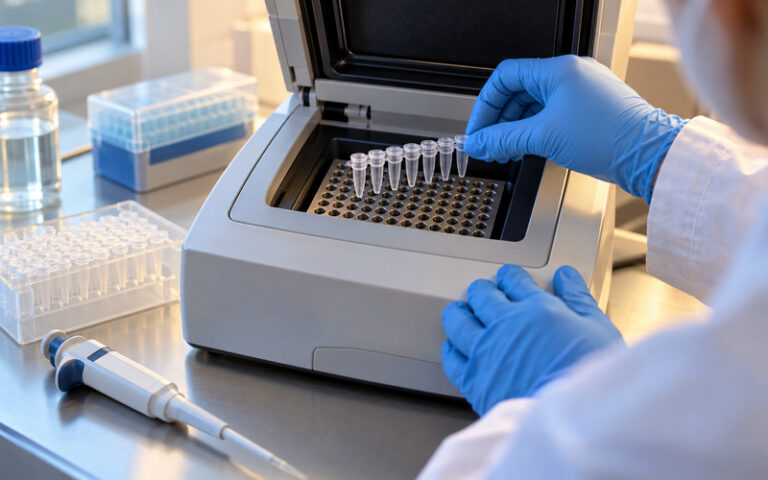
PCR Explained for Beginners
A beginner’s guide to PCR, from primers and thermal cycling to controls, common formats, failure modes, and responsible result…Read Article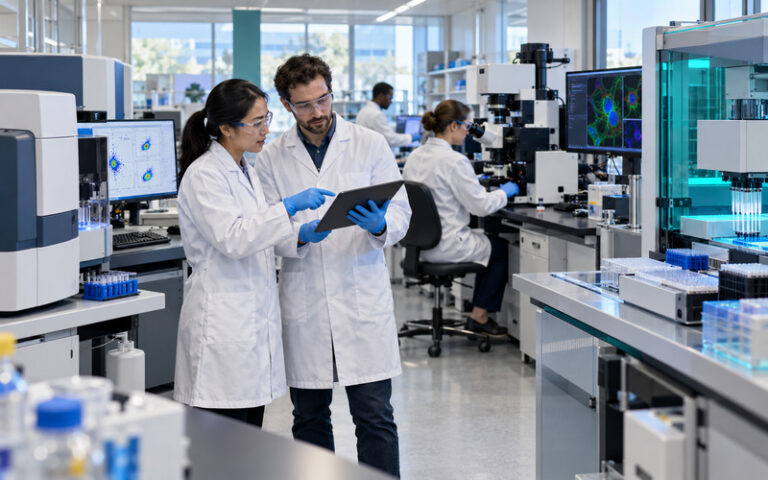
Core Research Facilities Explained for Beginners
A beginner’s guide to core research facilities, from consultation and training to sample submission, data delivery, user fees, and…Read Article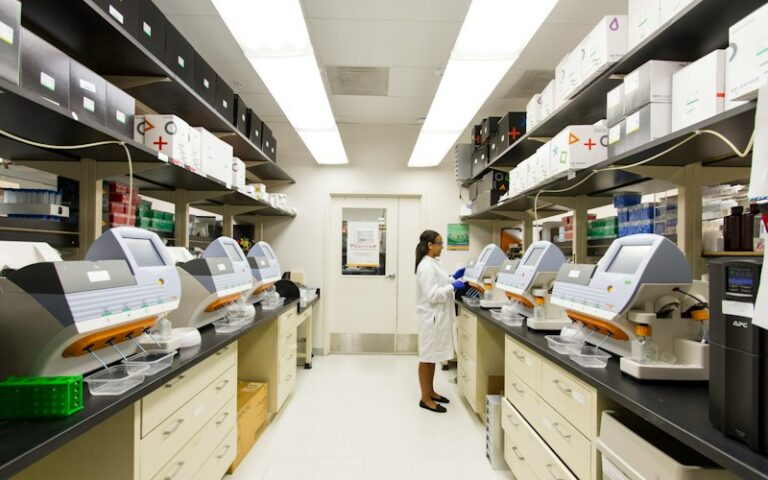




Leave a Reply