

This week’s laboratory news spans diagnostic authorizations, AI-assisted imaging, microbiome research, and the infrastructure needed to produce reliable measurements.
Coverage period: Nov. 21–27, 2026. Research cutoff: Nov. 27, Eastern time. Dates below refer to announcements unless a separate regulatory decision date is stated.
The practical theme running through this week’s announcements is the path from a technology to a usable laboratory result. Two diagnostic developments concern defined clinical applications, an imaging update targets work within an existing instrument workflow, and new research facilities emphasize access, training, and measurement quality. Here are six developments worth catching up on, with their limits and implications for laboratory teams.
Siemens Brings An NfL Assay Into U.S. Multiple Sclerosis Care
Siemens Healthineers announced Nov. 23 that its Atellica IM Neurofilament Light Chain assay received FDA De Novo marketing authorization. The blood test aids evaluation of ongoing disease activity in people ages 18–55 with relapsing-remitting multiple sclerosis, in conjunction with clinical, imaging, and laboratory findings. It runs on the Atellica IM Analyzer and measures NfL in serum and EDTA plasma. The FDA database records the decision date as Nov. 10; the company announced it during this week’s coverage window.
For clinical laboratories, the development places a neurological biomarker on an automated immunoassay platform. Its stated role is an aid to disease-activity evaluation, so laboratories introducing the test will need to communicate its intended population and interpretive context clearly. The announcement does not establish it as a stand-alone MS diagnostic test. Read the Siemens Healthineers announcement or LabPress coverage.
Roche Lesion Panel Receives Emergency Authorization
NIH reported Nov. 24 that Roche’s cobas liat Lesion Panel received FDA emergency use authorization on Nov. 20. The molecular panel detects and differentiates Treponema pallidum, herpes simplex virus types 1 and 2, and monkeypox virus from a single lesion swab, with results in about 15 minutes. NIH’s diagnostic test assessment program supported the evidence-generation effort. The agency said U.S. availability was expected in the coming months.
The development concerns direct detection from lesion specimens, an important distinction from antibody-based syphilis testing. For laboratory and point-of-care programs, the operational questions include specimen collection, the authorized conditions of use, and how results enter the wider diagnostic pathway. An EUA has a specific regulatory meaning and should not be described as FDA clearance or approval. Read NIH’s announcement or LabPress coverage.
Molecular Devices Adds Guidance And Label-Free Viability Tools
Molecular Devices announced two imaging software capabilities Nov. 24. The MetaXpress Acquire AI Assistant answers natural-language questions using the company’s software documentation and is available as a free software update for ImageXpress high-content imaging systems. Separately, a purchasable IN Carta application analyzes transmitted-light images to identify cells and classify them as live or dead without a fluorescent viability marker in supported applications.
The company identifies HeLa, U2OS, and HCT116 as validated cell lines for the label-free application. That boundary matters when laboratories assess whether a tool can transfer to their own models and imaging conditions. The two additions also solve different problems: the assistant provides software-use guidance, while the IN Carta application performs image analysis. Neither announcement independently demonstrates performance across every assay a laboratory might run. Read the Molecular Devices release or LabPress coverage.
Genetic Analysis Signs Microbiome Supply Agreement With Merck
Genetic Analysis announced Nov. 25 that it entered an original equipment manufacturer agreement to supply three research-use-only microbiome profiling products to Merck. Merck will market and distribute them under its own branding. According to Genetic Analysis, the assays combine Luminex xMAP technology with its method for detecting and quantifying microbiome targets, serving academic, industrial, and commercial research organizations.
The intended applications include research in human health, environmental studies, agriculture, biotechnology, and industrial microbiology. The release explicitly excludes diagnostic procedures and other clinical applications. For research laboratories, the agreement is a distribution and product-access development; the release does not provide the detailed target coverage or comparative performance data needed for method selection. Those remain questions for product-specific documentation. Read Genetic Analysis’ announcement or LabPress coverage.
Bangkok Center Expands Access To Analytical Training
Agilent and Chulalongkorn University opened the STREC-Chula-Agilent Experience Center in Bangkok on Nov. 26. The center combines the university’s Scientific and Technological Research Equipment Centre with Agilent instrumentation and application expertise. The partners describe research, method development, demonstrations, training, and internships covering health, biotechnology, food safety, environmental monitoring, pharmaceuticals, and advanced materials.
The significance for laboratory operations is access to instruments together with people who can help develop and apply methods. Agilent said the center is also open to companies across industries, extending its intended reach beyond university researchers. Laboratories considering collaboration should establish the available instruments, access arrangements, and project support directly with the center. Its opening establishes a new resource; the announcement does not yet demonstrate downstream research or commercial outcomes. Read Agilent’s announcement or LabPress coverage.
Germany Starts Operations At 12 ACTRIS Calibration Laboratories
Germany brought 12 atmospheric measurement calibration laboratories into operation Nov. 26 as part of ACTRIS-D, according to the Leibniz Institute for Tropospheric Research, or TROPOS. The facilities support measurements of aerosol particles, clouds, and reactive trace gases within the European ACTRIS research infrastructure. The laboratories were developed over several years to improve consistency and comparability across measurement systems.
The announcement is a reminder that research infrastructure includes the calibration work behind an instrument’s output. Data from different locations and measurement campaigns become more useful when teams can compare them on a reliable basis. TROPOS said long-term operation of the German calibration centers will be financed by federal ministries. For atmospheric researchers and instrument developers, the practical value will depend on how the facilities support their measurement and quality-assurance needs. Read the TROPOS announcement or LabPress coverage.
What To Watch In Your Laboratory
This week’s announcements give laboratory teams several useful questions for upcoming evaluations: Is the claimed benefit supported for the actual specimen or cell model? Is a product authorized for the intended clinical use, or restricted to research? Does a new instrument capability come with the training, interpretation, and quality controls needed to use it well? Those questions connect the clinical, research, and environmental stories without assuming that one product or facility solves every workflow problem.
For more practical reading, explore our integrated automation workcell buyer’s guide and plant pathogen testing workflow guide.
Which development is most relevant to your laboratory: automated biomarker testing, imaging analysis, microbiome profiling, or better access to calibration and training?
Lab Lowdown is LabPress’ weekly editorial roundup. Product capabilities and availability are attributed to the linked original announcements; editorial implications are LabPress analysis. Featured photograph: Testalize.me / Unsplash, illustrating laboratory automation.
Keep Exploring
Related Reading
Lab Lowdown for November 6, 2026
Six laboratory developments from Oct. 31 through Nov. 6, including hemorrhagic-fever PCR, rare-disease genomics, lab informatics, ion mobility, and…Read Article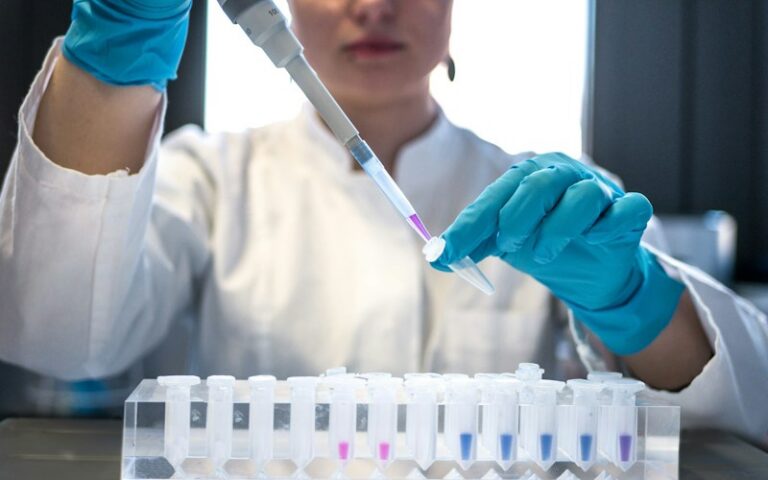
Lab Lowdown for October 16, 2026
This week’s laboratory briefing covers AI-connected instruments, genomic analysis, mRNA-production enzymes, agricultural research capacity, and Labcorp’s proposed BioReference acquisition.Read Article



Leave a Reply