Press release summary
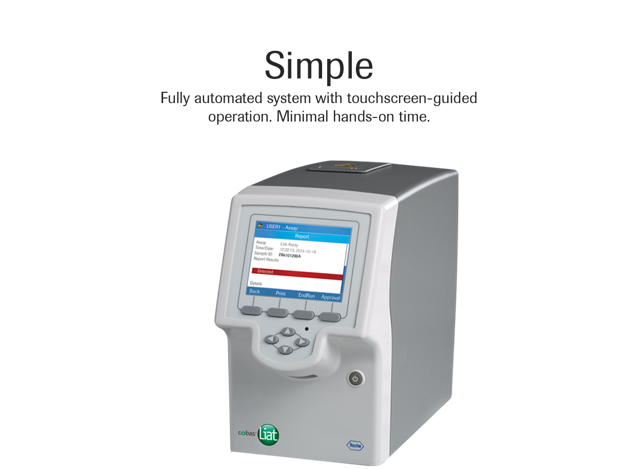
A Roche molecular test that differentiates four pathogens associated with similar-looking skin lesions has received emergency use authorization from the U.S. Food and Drug Administration, according to the National Institutes of Health.
The cobas liat Lesion Panel detects Treponema pallidum, the bacterium that causes syphilis, along with herpes simplex virus types 1 and 2 and monkeypox virus from a single lesion-swab specimen. The point-of-care assay is designed to return results in approximately 15 minutes for use in clinics, emergency departments, urgent-care centers and public health facilities.
NIH’s RADx Tech Independent Test Assessment Program supported validation and clinical evaluation. NIH, FDA, Roche and two independent laboratories also developed the evidence approach used for the syphilis target because no authorized molecular comparator was available for lesion specimens.
Why it matters to laboratory readers: Direct pathogen detection could help distinguish active syphilis from prior infection and support treatment decisions during the same visit. Laboratories and point-of-care programs must still follow the authorization’s specimen, operator and quality requirements. Emergency authorization is also legally distinct from FDA clearance or approval.
Original release: National Institutes of Health, Nov. 24, 2026.
Keep Exploring
Related Reading

Siemens Healthineers Gets FDA Authorization for Atellica NfL Blood Test
The FDA authorized Siemens Healthineers’ automated Atellica IM neurofilament light chain blood assay to aid evaluation of disease activity…Read Article
Pattern Bioscience Submits Pneumonia ID/AST Panel for FDA Review
Pattern Bioscience submitted its investigational Pneumonia ID/AST Panel for FDA review, advancing a direct-from-specimen test designed to return pathogen…Read Article



Leave a Reply