

Key Points
- Illumina opened early access to a research-use duplex-sequencing workflow for molecular residual disease studies.
- Agilent introduced an integrated DNA and RNA panel for hematologic tumor research, while bioMérieux secured U.S. and European authorization for a new automated ID/AST platform.
- The FDA finalized its emergency-pathogen IVD validation guidance, and USDA confirmed the first reported HPAI detection in Oregon dairy cattle.
- EPA and NIST highlighted measurement challenges in lead-pipe identification and critical-minerals reference materials.
This edition covers original announcements published from Saturday, Nov. 7, through Friday morning, Nov. 13, 2026. The week moved from ultrasensitive sequencing and clinical microbiology to emergency-test validation, animal-health surveillance, environmental measurement, and reference-material needs. Here are seven developments worth a quick catch-up, with research-use boundaries, company-reported performance, and regulatory scope kept explicit.

Illumina Adds Duplex Sequencing to Its MRD Research Portfolio
Published Nov. 9: Illumina opened an early access program for a whole-genome duplex-sequencing workflow designed to study trace circulating tumor DNA in plasma. The research-use-only workflow combines duplex chemistry, NovaSeq X sequencing, and DRAGEN bioinformatics. Illumina says it supports 5 to 10 nanograms of cell-free DNA input, and the company reported reproducible detection at 2.5 parts per million in representative studies. Early access kits are expected to ship in the first quarter of 2027.
Duplex sequencing compares both complementary strands of an original DNA molecule, which can help researchers distinguish low-frequency biological signals from preparation and sequencing errors. The reported sensitivity is a vendor result, not evidence of clinical performance. Laboratories evaluating the workflow will need representative samples, independent performance work, contamination controls, sequencing-depth requirements, bioinformatics version control, and clear rules for how research findings are interpreted.
Agilent Combines DNA and RNA Profiling for Hematologic Tumor Research
Published Nov. 10: Agilent introduced SureSelect Cancer Research Pan Heme, a hybrid-capture NGS solution developed with Roswell Park Comprehensive Cancer Center. The research-use-only panel targets 359 DNA genes and 124 RNA genes and is designed to assess single-nucleotide variants, insertions and deletions, copy-number variants, immunoglobulin translocations, and gene fusions. The workflow can pair with the Magnis NGS Prep System and QIAGEN Clinical Insight software.
Integrated DNA and RNA analysis can reduce separate-workflow handoffs in hematologic cancer research, but panel breadth does not eliminate the need to validate extraction, library preparation, fusion detection, copy-number performance, coverage limits, variant review, and reporting. Agilent says Roswell Park’s implementation supports sample-to-report results in about 48 hours. That turnaround reflects one implementation and should not be treated as a guaranteed laboratory-wide benchmark.
bioMérieux Clears VITEK PRO for Automated Microbial ID and Susceptibility Testing
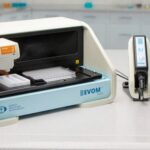
Published Nov. 10: bioMérieux announced FDA 510(k) clearance and IVDR CE marking for VITEK PRO, an automated platform that combines microbial identification with antimicrobial susceptibility testing. The company plans a first-quarter 2027 commercial launch in selected U.S. and European markets, followed by wider availability in the second quarter as the platform begins replacing VITEK 2 and VITEK XL systems.
The authorization gives microbiology laboratories a new migration path for routine ID/AST, but implementation will still require site-specific verification, interface validation, staff competency, quality-control planning, breakpoint governance, instrument-capacity analysis, and coordination with antimicrobial-stewardship teams. bioMérieux describes flexible capacity and a broad testing menu; laboratories should assess the released configuration and local menu rather than relying on general platform claims.
FDA Finalizes Emergency-Pathogen IVD Validation Guidance
Published Nov. 9: The FDA finalized guidance on validating in vitro diagnostic devices for emerging pathogens during an applicable public-health emergency declaration under Section 564 of the Federal Food, Drug, and Cosmetic Act. The document and associated template address information submitted through pre-Emergency Use Authorization interactions, EUA requests, or an applicable enforcement-discretion policy.
The final guidance gives developers and laboratories a clearer validation framework for emergency conditions, when access to specimens, reference materials, and comparator methods may be constrained. It does not authorize a test on its own or replace the terms of a specific emergency declaration. Teams should map specimen types, inclusivity and cross-reactivity work, analytical sensitivity, controls, stability, clinical evidence, labeling, and post-authorization obligations to the current declaration and FDA instructions.
USDA Confirms HPAI in an Oregon Dairy Herd
Published Nov. 10: USDA’s Animal and Plant Health Inspection Service said the National Veterinary Services Laboratories confirmed H5 clade 2.3.4.4b highly pathogenic avian influenza by PCR in an Oregon dairy herd. USDA described it as the first reported HPAI case in cattle in Oregon and said genetic sequencing was still underway. The herd was identified through surveillance under the National Milk Testing Strategy.
The detection shows why veterinary surveillance depends on linked sampling, accessioning, PCR, reflex sequencing, epidemiology, and reporting rather than a single analytical result. USDA said the finding did not change its eradication strategy and that commercial pasteurized milk remained safe. Laboratories supporting surveillance should preserve chain of custody, specimen metadata, result escalation, and retained material for confirmation and characterization.
Original USDA announcement | LabPress veterinary diagnostics workflow guide
EPA Tests Noninvasive Ways to Identify Lead Service Lines
Published Nov. 10: The EPA hosted a public demonstration at its Lead Service Line Identification Test Bed in Edison, New Jersey. Dartmouth researchers demonstrated electromagnetic induction, which measures responses from buried metal pipes, while a Drexel team used stress waves generated through an accessible valve and captured by ground sensors. Both approaches are intended to distinguish lead from other service-line materials with less excavation.
The test bed provides controlled, known infrastructure for comparing emerging field-measurement methods. EPA emphasized that participation is not certification, recommendation, or endorsement. Before utilities use a method for inventory decisions, they will need evidence on detection limits, pipe configurations, soil and moisture effects, false classifications, operator variability, calibration, and confirmation against exposed or otherwise verified materials.
NIST Asks Laboratories to Identify Critical-Minerals Reference Material Gaps
Published Nov. 12: NIST launched a national survey on physical reference materials and consensus documentary standards for critical minerals and materials. The agency is seeking input from laboratory managers, principal investigators, process engineers, characterization specialists, and other technical leads. Responses are due Dec. 18.
Reference-material shortages can limit calibration, method validation, proficiency comparisons, uncertainty estimates, and comparability across exploration, refining, recycling, and manufacturing laboratories. The survey gives working laboratories a route to describe the matrices, analytes, concentration ranges, material forms, and standards gaps that create practical bottlenecks. NIST says the results will inform future measurement services, reference-material development, and documentary-standards work.
NIST survey announcement | LabPress overview of mining and materials testing
Keep Exploring
Related Reading

Lab Lowdown for October 30, 2026
This week’s Lab Lowdown tracks six verified developments across laboratory automation, IVD sequencing, energy materials, laboratory informatics, chromatography software,…Read Article
Lab Lowdown for October 23, 2026
This week’s Lab Lowdown covers advances in abuse-potential testing, GxP monitoring, at-home cancer screening, high-throughput sequencing, and biomedical AI.Read Article




Leave a Reply