
Press release summary
Illumina said Nov. 9 that it opened an early-access program for an ultrasensitive duplex-sequencing workflow for molecular residual disease research. The research-use-only approach analyzes both strands of an original DNA molecule to help distinguish biological variants from errors introduced during library preparation or sequencing.
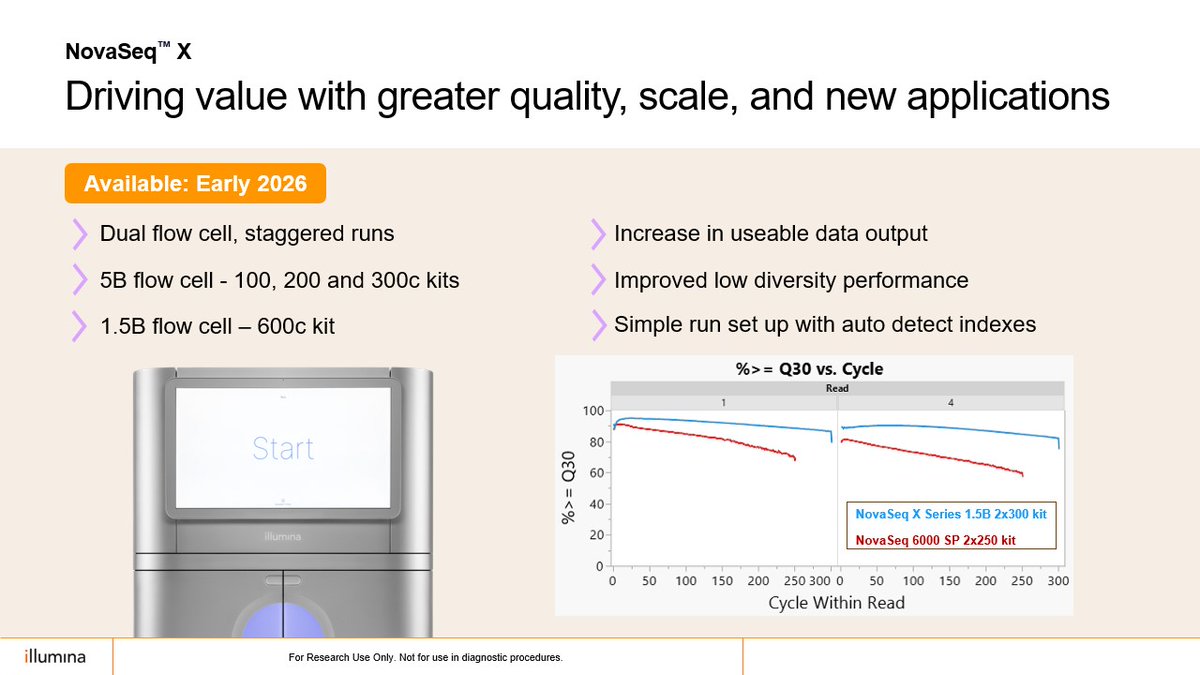
The workflow combines NovaSeq X sequencing, new duplex chemistry and DRAGEN bioinformatics. Illumina said it supports 5 to 10 nanograms of cell-free DNA input, produces duplex consensus reads and examines thousands of tumor-specific variants across the genome. In representative company studies, the method reproducibly detected circulating tumor DNA at 2.5 parts per million. NYU Langone Health is participating in the early-access program, and Illumina expects kits to begin shipping in the first quarter of 2027.
Why it matters to laboratory readers
Duplex sequencing may improve confidence when researchers look for extremely low-frequency tumor signals, particularly in early-stage or low-shedding cancers. The standardized whole-genome approach could also reduce reliance on a custom panel for every sample. Laboratories should still evaluate sequencing depth, compute requirements, sample quality, cost and analytical validation. The workflow is for research use only, and the reported sensitivity comes from representative studies rather than an approved clinical claim.
Original release: Illumina’s Nov. 9 announcement.
Leave a Reply