
Key Points
- An out-of-specification result starts an investigation. It does not automatically prove either laboratory error or batch failure.
- Preserve the original data, preparations, chromatograms, calculations, and instrument context before testing a hypothesis.
- Retesting, resampling, and method-suitability work answer different questions. Each needs a documented scientific rationale.
- A passing retest cannot erase an unexplained original OOS result. The quality unit evaluates the complete record for disposition.
- Recurring laboratory causes belong in the quality system, with corrective action, preventive action, and trend review.
A practical framework for moving from an unexpected pharmaceutical result to a defensible quality-unit decision.
An out-of-specification result creates pressure from several directions at once. The laboratory wants to understand the measurement, production needs a timely answer, and the quality unit must protect the integrity of the investigation and the eventual batch decision. The fastest defensible response begins by separating what is known from what is merely plausible.
This guide focuses on chemistry-based testing for pharmaceutical production, including assay, impurities, and related release or stability work. FDA’s May 2022 OOS guidance covers traditional chemistry-based testing of drugs regulated by the Center for Drug Evaluation and Research. It notes that its principles can apply to chemistry testing of biotechnology products, while biological assays require additional, method-specific consideration. The laboratory’s approved procedures, filings, compendial obligations, quality agreements, and applicable local requirements control the actual investigation.
Start With the Decision the Evidence Must Support
The core question is not simply whether a second test passes. The investigation must determine whether the original result reflects the measurement process, the sample, or the manufactured material, then evaluate the result’s impact on the batch and any related batches or products.
21 CFR 211.192 requires a thorough investigation of an unexplained discrepancy or a batch or component failing a specification, whether or not the batch has already been distributed. The investigation must extend to associated batches or products and include written conclusions and follow-up. 21 CFR 211.165 requires appropriate final-specification testing before release and rejection of drug products that fail established standards or relevant quality-control criteria.
| Evidence Path | Question | Decision Implication |
|---|---|---|
| Demonstrated laboratory error | Is there documented evidence that a specific event caused the original result? | The suspect result may be invalidated only when the causal test event is observed and documented. Preserve the original record and address recurrence risk. |
| Confirmed product or process failure | Does the evidence show that the batch does not meet its established requirements? | Use the confirmed result in batch disposition, investigate related batches or products, and address the root cause. |
| Inconclusive investigation | Has the review neither established laboratory error nor confirmed a batch cause? | The quality unit considers the unexplained OOS result together with all other evidence. Passing additional tests do not make the first result disappear. |
The cited federal regulations establish investigation, documentation, testing, and quality-unit obligations. The staged workflow below is an editorial operating model based on FDA guidance. It should be adapted to the firm’s authorized procedures rather than copied as a universal SOP.
Build a Phase I Laboratory Assessment That Tests Hypotheses
FDA’s OOS guidance recommends a timely, objective assessment before stable test preparations are discarded. The analyst should notify the supervisor when an unexpected result has no obvious explanation. The supervisor then reviews the method, raw data, calculations, instrument performance, reference standards, solvents, reagents, and historical method behavior.
Contain and Preserve
Hold the affected material under the firm’s procedures. Preserve electronic and paper records, chromatograms, spectra, audit-trail context, instrument logs, calculations, sample and standard preparations, glassware observations, and relevant environmental or sequence information. Record what is stable enough to retain and for how long.
Reconstruct the Run
Map sample receipt, preparation, instrument sequence, system-suitability performance, integration, calculations, and result approval. Compare timestamps and identities across the chromatography data system, instrument, worksheets, and laboratory information system. A coherent timeline helps distinguish a test event from a convenient theory.
Write Testable Hypotheses
A hypothesis should predict what evidence would support or weaken it. Suspected dilution error, for example, may justify examining retained solutions, gravimetric records, pipette status, preparation steps, and expected proportional effects. “Analyst error” without an identified mechanism is a label, not a root cause.
Decide Whether the Review Expands
If clear evidence demonstrates a causal laboratory error, document the invalidation, correction, and recurrence assessment. If the initial review finds no such cause, escalate to the full-scale investigation led by the quality unit, including production and sampling review.
21 CFR 211.160 requires scientifically sound laboratory controls, quality-unit review and approval, contemporaneous documentation, and justified records of deviations from written controls. This makes the investigation protocol part of laboratory control, not a separate exercise performed after the data have been interpreted.
Choose Additional Testing for the Question It Answers
Additional testing can strengthen an investigation when it follows a predefined or quality-unit-approved plan. It becomes weak evidence when the number or type of tests changes after each result. FDA identifies repeated testing until a pass appears as “testing into compliance” and recommends that the maximum number of retests be established in advance on scientifically sound principles.
| Action | Material and Purpose | When It May Be Informative | Main Risk |
|---|---|---|---|
| Reinject a retained solution | Uses the same final preparation to examine an instrument or injection hypothesis. | Evidence points to transient instrument behavior, sequence interruption, or injection failure. | It cannot evaluate errors introduced during the original weighing, extraction, or dilution. |
| Retest the original homogeneous sample | Uses another portion of the original sample to test a stated analytical or handling hypothesis. | The plan is predefined or specifically approved, the sample remains suitable, and the result will distinguish credible causes. | Unplanned repetition can become testing into compliance. All results remain part of the record. |
| Resample the batch | Collects additional units under an authorized sampling strategy to evaluate representativeness or batch variability. | The investigation supports a sampling problem or demonstrates that the first sample was not representative. | A new sample can hide a true heterogeneous-batch problem when used merely because the original result was undesirable. |
| Method-suitability or robustness work | Uses a separate protocol to examine extraction, interference, stability, or instrument behavior. | The OOS exposes a plausible method limitation that existing validation or transfer knowledge does not resolve. | Exploratory work should not be retrofitted as routine reportable testing or used to rewrite the original result. |
Averaging also needs discipline. Replicate injections specified by the approved method may produce one reportable result. Averaging independent preparations or retests to dilute an OOS result answers a different question. FDA’s guidance also explains that an outlier test may describe how unusual a value is, but it does not identify a cause and should not invalidate a chemical-assay result. For tests where product variability is itself being assessed, such as content uniformity or dissolution, an apparent outlier may be valid product information.
Record the hypothesis, material, analyst, number of tests, data treatment, and decision boundary before additional testing begins. If a deviation from the established retesting procedure is scientifically necessary, document and obtain the required approval before executing it.
Expand From the Bench to the Manufacturing System
When Phase I does not demonstrate a causal laboratory error, the investigation should move beyond the bench. FDA recommends a quality-unit-led review involving departments that may be implicated, including manufacturing, process development, maintenance, and engineering. Potentially involved contract organizations and other sites belong in the scope when the evidence crosses organizational boundaries.
Production and Sampling Review
Review batch and equipment records, raw-material and component history, deviations, in-process trends, process parameters, hold times, cleaning records, maintenance, environmental conditions, and the sampling plan. Look for mechanisms consistent with the observed result rather than a generic documentation checklist.
Impact and Recurrence Review
Search prior OOS, out-of-trend, deviation, complaint, stability, and maintenance records using comparable products, methods, instruments, materials, and unit operations. Define the search logic and time window so the absence of a trend is supported by a reproducible query.
Quality-Unit Interpretation
The quality unit reviews the complete evidence set, including the original result and all additional data. A contract laboratory should transmit its findings and supporting documentation promptly enough for the manufacturer to conduct the full investigation.
Corrective and Preventive Action
A demonstrated cause should lead to proportionate correction, recurrence control, effectiveness checks, and consideration of related systems. FDA’s ICH Q10 guidance describes a pharmaceutical quality-system model that connects investigation, CAPA, change management, and management review.
An Illustrative HPLC Assay Investigation
A solid oral-dose batch is tested by an approved high-performance liquid chromatography assay with a specification of 95.0% to 105.0% of label claim. The initial reportable result is 94.6%. These invented values demonstrate investigation logic only and do not establish a suitable specification, alert limit, or retesting plan for another product.
The analyst immediately informs the supervisor and retains the sample, standard, and test solutions within their established stability periods. System suitability passes. Raw-data review finds no unauthorized integration, calculation error, sequence interruption, or failed instrument check. The balance and volumetric equipment were within their approved status, and the preparation record contains no observed spill or incomplete transfer.
Because Phase I does not demonstrate laboratory error, the quality unit opens the full investigation. A predefined retest plan is executed on the original homogeneous sample. The additional results fall within specification, but they do not invalidate the 94.6% result. The production review then identifies a compression-stage feeder adjustment near the time the sampled units were produced. Targeted review of in-process data and the authorized sampling rationale becomes more informative than continuing to generate laboratory replicates.
The final decision considers the entire evidence set, the investigation’s uncertainty, related batches, and the firm’s procedures. If the quality unit cannot establish laboratory error or another conclusive cause, the original OOS result still receives full consideration.
This example shows why analytical and manufacturing timelines should meet. A chromatographic run can be technically acceptable while the sample accurately reflects a process variation. Conversely, a plausible production event should not be declared causal without evidence that connects it to the observed result.
Common Failure Modes That Weaken OOS Records
Retesting Before the Hypothesis
Starting additional injections or preparations before defining what they will prove encourages result-driven decision-making. Preserve the original materials, then approve the plan.
Discarding Stable Preparations
Once a solution is gone, the investigation may lose its best opportunity to distinguish instrument behavior from preparation error. Build retention checks into the analyst’s immediate response.
Calling It Analyst Error
Training may be relevant, but “analyst error” without a documented mechanism leaves the root cause unresolved. Examine whether the procedure, interface, equipment, environment, or workload made the event likely.
Closing at Batch Rejection
Rejecting the batch does not end the duty to investigate. The review still needs to address cause, related batches or products, follow-up, and recurrence controls.
Using an Outlier Test as a Cause
Statistical distance does not explain the result. Separate descriptive analysis from causal evidence and from the authorized method’s data treatment.
Losing the Contract-Lab Handoff
When testing and manufacturing sit in different organizations, define who preserves materials, who authorizes additional work, what is transmitted, and who owns the full-scale investigation.
OOS Investigation Readiness Checklist
- Define the trigger. State which specifications, acceptance criteria, in-process results, and atypical findings enter the OOS or related investigation workflow.
- Protect the evidence. Preserve raw data, metadata, audit-trail context, stable preparations, records, calculations, instrument status, and chain of custody.
- Separate observation from inference. Record the result and run conditions before proposing causes.
- Test hypotheses deliberately. Link each check, reinjection, retest, resample, or method study to a question and a stopping rule.
- Expand the scope when needed. Include manufacturing, sampling, maintenance, engineering, suppliers, contract partners, related batches, and distributed product as the evidence requires.
- Retain every result. Preserve passing, failing, suspect, and invalidated data with the explanation and approval trail.
- Document the disposition logic. Show how the quality unit weighed the evidence, uncertainty, investigation conclusion, and applicable requirements.
- Close the quality loop. Assign correction, CAPA, change control, effectiveness checks, and trend review where warranted.
Instrumentation and maintenance choices affect the evidence available during an investigation. LabPress’s HPLC and UHPLC guide for regulated QC laboratories covers data workflow, qualification, service, and continuity questions. The preventive maintenance checklist can help teams connect scheduled work to analytical performance, while the instrument lifecycle guide addresses governance across selection, qualification, use, and retirement.
Where Does Your OOS Workflow Lose Time?
Does the delay usually come from preserving evidence, approving additional testing, coordinating production review, or reaching the final quality-unit decision? Share the workflow bottleneck and what has helped your team in the comments, without disclosing confidential product or batch information.
Sources and Scope
Sources checked Oct. 10, 2026. Regulatory statements refer to the cited U.S. CGMP provisions. FDA guidance is nonbinding and describes the agency’s current thinking. Editorial workflow suggestions are identified separately and do not replace approved procedures or legal advice.
- FDA, Investigating Out-of-Specification Test Results for Pharmaceutical Production, Revision 1, May 2022.
- 21 CFR 211.160, General Requirements, eCFR current through Oct. 7, 2026.
- 21 CFR 211.165, Testing and Release for Distribution, eCFR current through Oct. 7, 2026.
- 21 CFR 211.192, Production Record Review, eCFR current through Oct. 7, 2026.
- FDA, ICH Q10 Pharmaceutical Quality System, April 2009.
- FDA, Data Integrity and Compliance With Drug CGMP, December 2018.
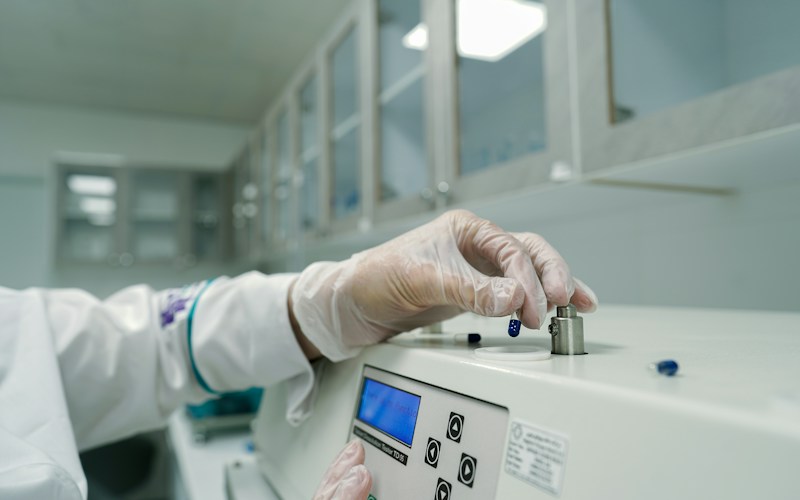
Featured photograph: Mina Rad via Unsplash. The generic laboratory scene illustrates instrument operation and does not depict the hypothetical investigation described here.
Keep Exploring
Related Reading
Verifying Reagent Lot Changes in Clinical Laboratories
A practical framework for comparing reagent lots, selecting patient specimens and controls, investigating shifts, and documenting a defensible clinical…Read Article
Lab Lowdown for October 9, 2026
Seven laboratory developments span fentanyl surveillance, lung organoids, food-quality testing, microscopy, informatics, LC-MS preparation, and mosquito testing.Read Article



Leave a Reply