
Key Points
- Research and surveillance: New findings track fentanyl adulterants and immune responses in human lung organoids.
- Bench workflows: Food-quality instruments, infrared microscopy, and magnetic extraction bring new options for laboratory teams.
- Data and local capacity: Document processing and planned mosquito-testing infrastructure put implementation questions in focus.
Lab Lowdown is your Friday catch-up on laboratory news. This edition covers the rolling seven days from 8:50 a.m. ET Oct. 2 through 8:50 a.m. ET Oct. 9, 2026. Seven developments connect new research with practical questions about sample preparation, measurement, data handling, and laboratory capacity. Original announcement dates appear below, with company claims and research limitations identified where they matter.
NIST Tracks a Shifting Fentanyl Supply
NIST reported Oct. 8 that an analysis of 4,563 drug-residue samples found substantial regional and temporal differences in fentanyl adulterants. The samples were collected from January 2024 through June 2026 through the agency’s Rapid Drug Analysis and Research program. Researchers used direct analysis in real time mass spectrometry, or DART-MS, to identify compounds rapidly. NIST described changing patterns involving xylazine, medetomidine, and the industrial chemical BTMPS.
For forensic and public-health laboratories, the practical message is that surveillance methods and reference information need to keep pace with changing mixtures. A finding from one region or collection period may have limited relevance elsewhere. This is an analysis of submitted residues, so readers should be cautious about treating it as a census of the national drug supply. Read NIST’s Oct. 8 research announcement.
Lung Organoids Preserve Local Immune Responses
An NIH announcement and Nature paper published Oct. 7 describe human lung organoids that retain functional, tissue-resident immune cells. Stanford researchers cultured intact lung fragments from more than 220 volunteers in a three-dimensional air-liquid interface. The models survived for months and mounted virus-specific T-cell responses after SARS-CoV-2 infection. Exposing the cultures to viral fragments before infection also reduced subsequent infection in the model.
For respiratory researchers, the appeal is a human tissue system in which local immune responses can be studied separately from whole-body immunity. That could help laboratories investigate mucosal vaccination and choose more relevant experimental endpoints. The results are preclinical; effectiveness in an organoid does not establish vaccine protection in people. Donor variability and reproducibility will be important considerations as other laboratories evaluate the approach. Read NIH’s account and the original Nature paper.
Addium Combines Moisture Measurements for Food Labs
Addium announced the general availability of its AQUALAB 5TE on Oct. 6, positioning the instrument for food R&D, production, and quality assurance. The company promotes combined water-activity and moisture-content results, cloud-linked batch records, and a user-swappable measurement block. Its launch release emphasizes a 60-second test, but its product comparison lists five minutes for standard measurement and one minute for AI-reading mode; simultaneous moisture-content reporting requires AQUALAB Cloud.
Those details matter when a laboratory estimates throughput or compares ownership costs. Teams should establish which measurement mode, cloud functions, and product-specific methods fit their release criteria before budgeting around the headline speed. Water activity and moisture content answer different quality questions, so a combined workflow still needs suitable verification for each result. Read Addium’s launch release, check its product specifications, and see LabPress’s coverage.
Thermo Fisher Expands Infrared Microscopy
Thermo Fisher Scientific introduced the Nicolet RaptIR X FTIR Microscope in a supplier announcement dated Oct. 6. The platform combines optical imaging and infrared microspectroscopy for identifying the chemistry of microscopic features. The manufacturer lists collection rates of up to 10 spectra per second, 5-micron infrared resolution, and a stage that accepts specimens up to 40 millimeters thick and 5 kilograms in weight.
The combination is relevant to materials identification, microplastics analysis, pharmaceutical formulations, and failure investigations where sample geometry can complicate preparation. A modular configuration also gives shared facilities several application options, although buyers should compare the detector, optics, and acquisition conditions behind each specification. These are manufacturer capabilities, and performance with a laboratory’s actual specimens still needs evaluation. Read the dated supplier announcement and official product details; LabPress has the overview.
Clinisys Connects Documents to Laboratory Workflows
Clinisys announced Oct. 7 that it is adding document-intelligence capabilities to Clinisys Laboratory Solution. The company describes optical character recognition, classification, metadata extraction, and indexing for requisitions, scanned records, reports, and other unstructured material. It also outlines document governance, traceability, and links to review, routing, and approval workflows.
The operational opportunity is familiar to anyone who has copied information from a PDF into a laboratory system. Bringing those documents into searchable workflows could reduce manual handling, but the release offers no independent accuracy benchmark. A useful evaluation would test difficult scans, missing fields, conflicting identifiers, and the route for human review. Laboratories should also distinguish these announced document functions from the agent-enabled workflows that Clinisys says remain under development. Read Clinisys’s original release and LabPress’s summary.
Phenomenex Targets the LC-MS Sample-Preparation Bottleneck
Phenomenex launched Strata-Mag RP on Oct. 8 for magnetic bead-based extraction in automated LC-MS/MS sample preparation. The company says the approach supports scaling clinical research workflows and avoids channeling and plugging associated with conventional solid-phase extraction formats. The announcement explicitly labels the product for research use only, excluding clinical diagnostic procedures.
For laboratories whose instruments outpace their preparation benches, the question is how much of the full workflow can be automated reliably. Recovery, matrix effects, carryover, and compatibility with the installed liquid handler should shape any method-transfer assessment. The launch announcement provides company claims rather than an independent comparison demonstrating those outcomes. Read the original announcement. For broader decision criteria, LabPress’s new environmental LC-MS sample-preparation guide compares dilution, solid-phase extraction, and liquid-liquid extraction in a different application setting.
Ute Tribe Orders In-House Mosquito Testing
Co-Diagnostics said Oct. 8 that the Ute Indian Tribe Mosquito Abatement Department ordered a complete Vector Smart laboratory installation. The planned setup would bring PCR testing of pooled mosquitoes into the department’s own laboratory on the Uintah and Ouray Reservation in northeastern Utah. The company describes a platform intended to provide local surveillance information for vector-control decisions.
The development points to the role of local molecular testing in public-health infrastructure, especially when specimen transport and outside-laboratory turnaround affect response times. The confirmed milestone is the order; the release does not establish a completed installation or report operational results. For comparable programs, staffing, contamination control, assay verification, and a clear reporting pathway will determine how effectively local testing supports field decisions. Read Co-Diagnostics’ announcement and LabPress’s coverage.
What Is Changing in Your Lab? Which of these developments could affect your workflow, and what evidence would you need before adopting a new approach? Share your view in the comments, or browse the Lab Lowdown archive.
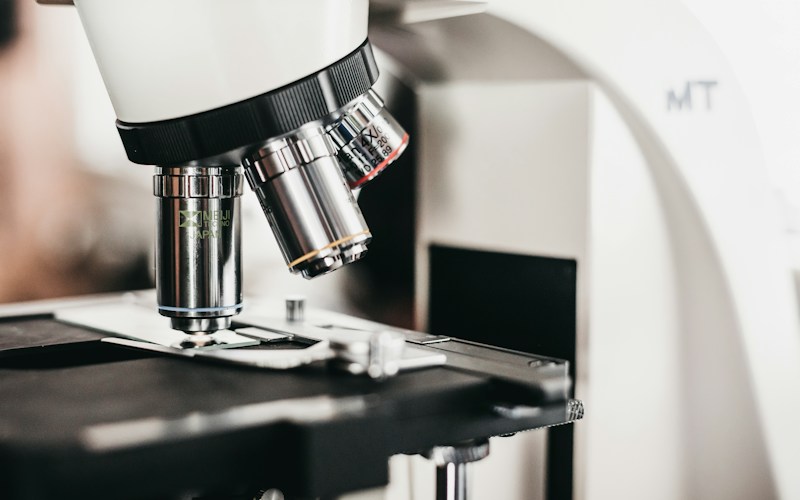
Featured image: Logan Gutierrez / Unsplash. Illustrative laboratory photograph.
Keep Exploring
Related Reading

Laboratory Instrument Service Contracts Compared
Compare OEM, multivendor, depot, and time-and-materials instrument service models, with coverage checks, response-time definitions, a cost worksheet, and practical…Read Article

Leave a Reply