
Key Points
- An experimental control is a comparison condition that helps researchers interpret whether an observed change is connected to the factor being tested.
- Negative controls reveal background signal or contamination, while positive controls show that the method can produce the expected response.
- Vehicle, blank, sham, matrix, and process controls answer different questions. A useful control should match the experimental samples in every relevant way except the factor it is designed to test.
- Controls do not replace randomization, blinding, replication, or a defined analysis plan. They work together to reduce bias and separate biological effects from technical variation.
- Control acceptance criteria should be written before the run. A failed control can make the sample results uninterpretable even when the instrument produces numbers.
An experimental control is a comparison built into an experiment so that researchers can understand what a result means. If a treated sample changes, the control helps answer a basic question: did the treatment cause the change, or could it have come from the sample, reagent, instrument, environment, or normal variation?
Controls are one of the foundations of rigorous laboratory research, but the word can be confusing because it describes several different things. A negative control, positive control, vehicle control, process control, and control group do not all serve the same purpose. Choosing the right one requires identifying the alternative explanation that the experiment must rule out.
This beginner-friendly guide defines the main control types, shows how they fit into a laboratory workflow, and explains common mistakes. For a broader discussion of repeating and verifying scientific work, see LabPress’s guide to research reproducibility.
What Is an Experimental Control?
In the simplest design, a researcher changes one independent variable and measures an outcome, or dependent variable. The control is the comparison condition that does not receive the change, receives a known change, or travels through the process in a way that tests a specific source of error.
For example, imagine a cell culture experiment testing whether a compound reduces cell growth. The treated wells receive the compound. The negative-control wells receive the same medium and handling but no active compound. If the compound is dissolved in dimethyl sulfoxide, or DMSO, the negative control should usually receive the same DMSO concentration. That is a vehicle control. A positive-control compound known to reduce growth can show whether the assay and detection system were capable of registering the expected response on that day.
The National Institutes of Health describes scientific rigor as the strict application of the scientific method to support robust, unbiased design, analysis, interpretation, and reporting. Appropriate controls are central to that goal because they make competing explanations visible.
The Main Types of Controls
| Control Type | Question It Answers | Laboratory Example |
|---|---|---|
| Negative control | What signal appears when the target effect or analyte should be absent? | A PCR reaction containing all reagents except template DNA |
| Positive control | Can the method produce or detect a known response? | DNA known to contain the target sequence in a PCR assay |
| Vehicle control | Could the solvent or carrier cause the observed effect? | Cells exposed to the same DMSO concentration as treated cells, without the test compound |
| Blank | How much signal comes from reagents, containers, or the measurement system? | Extraction solvent carried through an analytical chemistry method without a sample |
| Matrix control | Does the sample background change recovery or measurement? | A known amount of analyte added to a representative food or environmental sample |
| Process control | Did the complete preparation and measurement workflow perform as expected? | A non-target organism added before nucleic acid extraction to monitor recovery and inhibition |
| Sham control | Could handling or a procedure, rather than the active intervention, explain the result? | Animals undergo anesthesia and handling without the active surgical step |
Negative Controls Establish the Baseline
A negative control should not produce the effect or signal of interest. It establishes background and can reveal contamination, nonspecific binding, autofluorescence, carryover, or an unintended effect of the procedure.
In PCR, a no-template control contains the amplification reagents but no sample DNA. Amplification in that well may indicate contaminated reagents or material carried from another reaction. In an immunoassay, a negative sample can reveal nonspecific binding. In cell culture, untreated or vehicle-only cells show how the cells behave without the active compound.
The best negative control resembles the experimental sample closely. Water is not always an adequate control for a complex biological extract because it does not reproduce the extract’s salts, proteins, inhibitors, or background fluorescence. A matrix-matched negative control may be more informative.
Positive Controls Show That the System Can Respond
A positive control produces a known response. It helps distinguish a true negative sample from a failed experiment. If both the test sample and positive control show no response, the researcher cannot confidently conclude that the sample lacked the effect. The assay, reagent, instrument, or preparation may have failed.
The positive control should challenge the relevant part of the workflow. Adding purified target DNA directly to a PCR plate confirms amplification but does not confirm that extraction worked. A separate process-positive control added before extraction can test more of the method. Some experiments need both.
More signal is not always better. The Assay Guidance Manual notes that moderate controls can be useful for monitoring assay performance because an extremely strong signal may remain visible even when sensitivity has deteriorated. A control near the biologically or operationally important range can reveal drift that a saturated control hides.
Control Groups Are Not the Same as Replicates
A control group supplies a comparison. A replicate supplies information about variation. These ideas support each other, but they are not interchangeable.
Technical replicates repeat a measurement on the same underlying sample. They can reveal pipetting or instrument variation. Biological replicates come from independent biological units, such as different cultures, animals, donors, or field samples. They help estimate how broadly the observed effect applies.
Three wells filled from the same cell suspension are usually technical replicates, not three independent experiments. Reporting the correct experimental unit prevents pseudoreplication, in which repeated measurements are incorrectly treated as independent evidence. Sample size should be based on the number of independent units and the planned analysis, not simply the number of wells or instrument readings.
Controls Work With Randomization and Blinding
Even a well-chosen control can be undermined if control samples are always placed on one side of a plate, measured first, handled by a different analyst, or processed on a different day. Those differences are confounders because they change along with treatment status.
Randomization distributes known and unknown sources of variation across groups. Blinding, also called masking, reduces the chance that knowledge of group assignments affects treatment, measurement, or interpretation. When full blinding is impractical, randomizing the order of measurement can still reduce bias, and the limitation should be documented.
Plate-based assays often use blocking to spread each condition across rows, columns, or plates. This makes it less likely that an edge effect, incubator gradient, reagent lot, or run date will be mistaken for the treatment effect.
An Accessible Workflow Example
Question: Does a candidate disinfectant reduce bacterial growth on a laboratory surface?
Step 1: Define the experimental unit. Each independently prepared surface coupon is an experimental unit. Multiple readings from one coupon are technical measurements, not independent coupons.
Step 2: Identify alternative explanations. Growth could change because of the disinfectant, the carrier solution, the wiping procedure, differences in starting inoculum, incubation conditions, or the detection method.
Step 3: Choose controls. A negative control receives the carrier and wiping procedure without the active disinfectant. A positive control uses a disinfectant with established activity. A growth control receives inoculum without disinfectant and confirms that the organism can grow. A sterility control contains no inoculum and checks for contamination.
Step 4: Randomize and match handling. Coupons are assigned to groups randomly, processed in a balanced order, and incubated together. Analysts use the same timing, volume, materials, and recovery procedure for every group.
Step 5: Set acceptance criteria before starting. The sterility control must show no growth, the growth control must fall within a defined range, and the positive control must produce the expected reduction. If those criteria fail, the run is investigated before any conclusion is drawn about the candidate disinfectant.
Step 6: Analyze independent units. The analysis compares the independently prepared coupons and reports the variation among them. Any excluded result and its reason are documented.
This same logic applies across laboratory sectors. In an analytical chemistry workflow, blanks and matrix spikes may replace the biological controls. In a molecular assay, no-template, extraction, and amplification controls may be needed. In an imaging experiment, untreated cells, a known phenotype, and a staining-only control can separate biology from optical background.
Common Control Mistakes
Using a Control That Does Not Match the Sample
If treatment samples receive a solvent, handling step, or matrix component that controls do not receive, any difference can have more than one explanation. Match every relevant condition except the variable under study.
Testing Controls in a Separate Run
A control measured on another day cannot fully reveal a problem with today’s reagent preparation, temperature, timing, or instrument state. Include run-level controls whenever the control is intended to qualify that run.
Accepting a Failed Control Because Samples Look Reasonable
Control criteria should be applied consistently. If a required positive control fails, negative sample results may be uninterpretable. If a blank is contaminated, low-level detections may be unreliable. Investigate the failure rather than choosing the result that seems plausible.
Overloading the Design
More controls are not automatically better. Every control should answer a defined question. Redundant or poorly placed controls consume material and plate capacity without improving interpretation. Start with a risk map of what could produce a false positive, false negative, or biased estimate.
Changing the Analysis After Seeing the Data
Define exclusions, normalization, thresholds, and control acceptance criteria in advance. Post hoc choices can unintentionally favor a preferred outcome. Exploratory changes can be useful, but they should be labeled and confirmed in a new experiment.
A Beginner’s Control Checklist
- Write the experimental question and identify the independent variable, outcome, and experimental unit.
- List the main alternative explanations for a positive, negative, or unexpected result.
- Choose a control for each important alternative explanation.
- Match control and experimental samples for vehicle, matrix, handling, timing, and measurement.
- Include a positive control that challenges the relevant portion of the workflow.
- Define technical and biological replicates correctly.
- Randomize allocation and measurement order when practical.
- Use blinding or coded samples where knowledge of group identity could influence decisions.
- Write control acceptance limits and corrective actions before running the experiment.
- Record reagent lots, instrument settings, timing, environmental conditions, and deviations.
- Report failed controls, exclusions, and limitations transparently.
The Core Idea
A good control does not merely make an experiment look complete. It makes the result interpretable. Negative controls define background, positive controls demonstrate capability, and process-matched controls reveal technical effects that could otherwise be confused with biology or chemistry.
For laboratory teams, the practical habit is to ask one question before every run: if the result is surprising, which control will tell us whether it is real?
Reader question: Which control has prevented the most expensive false conclusion in your laboratory?
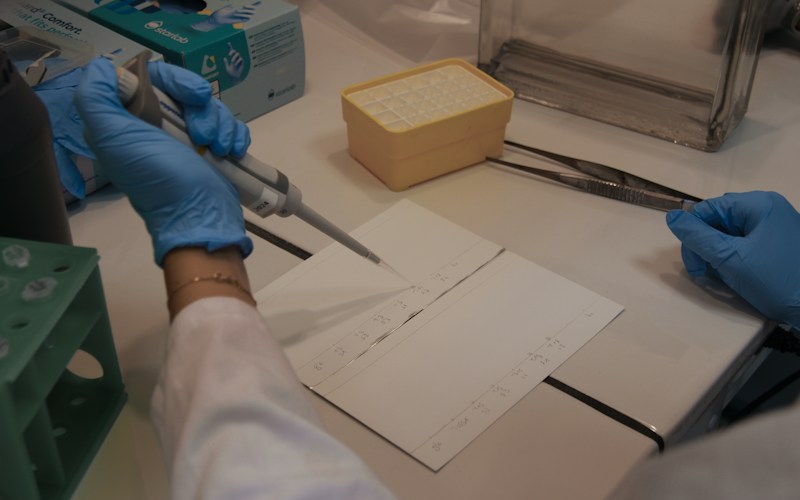
Featured image: Nathan Rimoux/Unsplash. Used under the Unsplash License.
Sources
- National Institutes of Health: Enhancing Reproducibility Through Rigor and Transparency
- NCBI Bookshelf: In Vivo Assay Guidelines, Assay Guidance Manual
- NCBI Bookshelf: Advanced Assay Development Guidelines for Image-Based High-Content Screening and Analysis
- NC3Rs Experimental Design Assistant
- NC3Rs: Blinding in Experimental Design
- NC3Rs: Key Elements of a Well-Designed Experiment
Keep Exploring
Related Reading
What Is Academic Laboratory Research?
A beginner’s guide to academic research laboratories, from questions, controls, and team roles to oversight, data stewardship, limitations, and…Read Article
What Is Life Science Research?
A beginner’s guide to life science research, from testable questions and biological models to controls, reproducibility, data stewardship, and…Read Article



Leave a Reply