A useful cannabis microbial testing workflow matches the required result to the product matrix, validates the entire method, and budgets time for controls, confirmation, and review.
A cannabis laboratory choosing between culture and molecular testing is making several decisions at once. It must establish what the result measures, whether the method works in the submitted product, how an unexpected result will be investigated, and when a defensible certificate of analysis can leave the laboratory. The fastest instrument run does not settle those questions.
The distinction matters because an enumeration result, a pathogen-detection result, and a mycotoxin measurement answer different questions. A workflow that produces one cannot automatically stand in for the others. For a laboratory evaluating a new platform or extending a method from flower to a formulated product, the starting point is a written statement of intended use.
Key Points
- Choose the required measurand and reporting decision before comparing platforms.
- Culture, molecular assays, and toxin measurements provide different evidence and require their own suitability checks.
- Compare sample-to-approved-report time, including enrichment, incubation, confirmation, and QA review.
- Validate matrix and preparation changes, and investigate discordant results under a documented procedure.
Define the Result Before Selecting the Method
Write a decision statement for each product family: the organism or microbial group of interest, whether the result is qualitative or quantitative, the required reporting unit, the applicable acceptance rule, and any required confirmation. Keep the current jurisdictional requirement and the laboratory’s validated procedure together in the method file. This guide does not propose a universal cannabis microbial limit.
A total yeast and mold count describes organisms recovered under particular growth conditions. A targeted molecular assay looks for specified genetic sequences. A mycotoxin assay measures a chemical hazard associated with some fungi. These results can support the same investigation, but they do not have interchangeable meanings.
Washington’s microbiological testing rule, for example, permits culture, immunoassay, molecular methods, or combinations, while specifying controls, records, and reporting requirements. That is a jurisdiction-specific framework, not blanket permission for any commercial kit in every market.
Compare the Evidence Each Approach Produces
| Approach | Useful Evidence | Workflow Tradeoff | Evaluation Question |
|---|---|---|---|
| Culture-Based Enumeration | Colony formation under the defined medium, preparation, and incubation conditions | Incubation and manual interpretation can govern turnaround; recovery depends on method conditions | Does the validated procedure recover the relevant organisms from this matrix? |
| Targeted PCR or qPCR | Detection or measurement of specified genetic targets, as defined by the assay | Preparation, possible enrichment, inhibition checks, and confirmation can outweigh instrument time | What does the validated result establish about the target, and what does it leave unresolved? |
| Mycotoxin Analysis | A separate measurement of specified fungal toxins | Extraction, matrix effects, analytical scope, and confirmation require independent evaluation | Which toxins and product types are covered by the method? |
| Sequencing for Investigation | Broader characterization of microbial DNA and community composition | Interpretation, reference databases, contamination, and additional analysis complicate routine use | Is this a validated compliance method or an investigative tool? |
The practical implication is to compare complete methods. Ask each supplier for the current validation report and instructions covering the exact assay, product matrix, test portion, enrichment, preparation, and interpretation rules. A validation certificate is an entry point to that review.
In its January 2021 announcement, bioMérieux described AOAC Performance Tested Methods validations for particular GENE-UP Salmonella and Shiga toxin-producing E. coli assays in cannabis and hemp flower at specified sample sizes. That example illustrates why a laboratory should read the scope rather than transfer a platform-level claim to every organism or edible. It is historical validation evidence; laboratories should obtain current documentation before adoption.
Make Matrix Suitability a Release Gate
Flower, oil, and a finished edible can create different preparation and recovery problems. Build the evaluation around actual product families and challenging formulations. Define which changes require another suitability assessment, including changes in product composition or sample preparation. Document the evidence supporting any grouping of matrices.
A Nov. 13, 2026, Massachusetts Cannabis Control Commission bulletin reinforces the importance of following validated preparation, sample-size, incubation, and enumeration procedures. It establishes a 60-to-72-hour window for culture-based yeast and mold enumeration in that jurisdiction and says laboratories must resolve a discrepancy when their validation does not support that window. The bulletin expressly distinguishes this expectation from a universal USP incubation rule.
Quoting USP Chapter <61>, the bulletin says, “Suitability must be confirmed if a change in testing performance or change in the product may affect the outcome of the test, is introduced.” For method selection, the operational lesson is to budget validation and change-control work before promising routine turnaround.
Do not reduce the test portion or shorten an incubation merely to fit a shift. If a supplier’s proposed workflow differs from the laboratory’s applicable requirement, make that discrepancy an explicit evaluation item and resolve it before implementation.
Evaluate the Entire Sample-to-Report Workflow
Map receipt, storage, subsampling, preparation, enrichment or incubation where required, analysis, confirmation, review, and reporting. Identify which steps can overlap and which must wait for a previous result. Record capacity by the limiting stage, including bench space, incubator space, analyst availability, and review coverage.
For a molecular workflow, ask the supplier to demonstrate how the system flags inhibition, invalid controls, and ambiguous results. Determine whether the laboratory can retain and review the underlying data and identify the assay and software version used. For culture, examine how plates are read, how atypical growth is handled, and how records remain traceable to the test portion.
Washington provides a concrete control example: its rule calls for DNA controls in each molecular analytical run and internal amplification controls in each individual reaction. It also requires positive and negative controls for microbial assays and a unidirectional workflow. Laboratories elsewhere should verify their own applicable requirements and adopt a justified contamination-control plan.
A useful comparison measures time to an approved, reportable result under routine and exception conditions. Include an invalid batch, a presumptive positive, a repeat preparation, and an analyst handoff in the demonstration. Those scenarios often reveal more about operational fit than a vendor’s best-case run time.
Keep Microbial Recovery and Toxin Risk Distinct
A 2025 study published in Toxins used culture, molecular methods, and ELISA to investigate cannabis buds following gamma irradiation. Its findings illustrate that microbial growth, genetic evidence, and residual toxins can diverge. The study’s small sample set limits generalization; it does not establish a market-wide contamination rate or a replacement compliance standard.
“Cannabis buds have sticky resins, so they are really susceptible to contamination,” Mamta Rani, a study co-author and McGill University research associate, said in the university’s January 2026 account of the research.
For laboratory managers, the actionable distinction is narrower than a claim that one technique proves product safety. A culture result does not quantify a toxin, and finding a toxin-related gene does not by itself establish the concentration of that toxin. Keep those endpoints and their uncertainties explicit when designing an investigation or communicating a result.
Plan for Failures Before They Occur
| Observation | Investigation Priority | Workflow Safeguard |
|---|---|---|
| Failed amplification control | Review preparation, inhibition, reagents, and instrument evidence | Prevent reporting an invalid reaction as a negative |
| Growth or signal in a negative control | Assess carryover, materials, and affected samples | Hold affected reporting under the nonconforming-work procedure |
| Discordant culture and molecular results | Compare targets, test portions, recovery conditions, controls, and validated interpretation | Use a predefined investigation and confirmation pathway |
| Unacceptable preparation or method deviation | Assess the effect on the intended result | Document disposition and corrective action before release |
These are editorial workflow recommendations, not substitute acceptance criteria. Each laboratory should define its own authorized actions within the applicable method, quality system, and regulatory framework. LabPress’s guide to experimental controls offers a useful refresher when training staff to distinguish a sample result from evidence that an analytical run worked.
Illustrative Example of a Matrix Extension
Hypothetical scenario, not a tested case study: A laboratory with a validated flower workflow wants to accept a new oil-based edible. Its current molecular assay produces an invalid internal-control result during evaluation of the new product.
The team keeps the new matrix outside routine release, compares the product and preparation against the assay’s validated scope, and evaluates a supplier-supported correction through its validation and change-control process. It then confirms that the revised workflow still meets the intended decision requirement and documents the conditions under which the product can be accepted.
The purchasing decision considers the added preparation and review burden alongside the analyzer. A nominally fast assay may be a poor fit if this product family requires frequent investigations that the laboratory cannot staff.
A Checklist for the Method Review Meeting
- Define the target, result type, reporting unit, and current jurisdictional requirement.
- Confirm the exact validation scope, product matrix, test portion, and required confirmation.
- Document suitability evidence and triggers for reassessment.
- Evaluate routine and failed-control workflows using representative products.
- Account for preparation, incubation or enrichment, consumables, waste, service, and review capacity.
- Verify raw-data retention, traceability, training, and result authorization.
- Approve acceptance criteria and the investigation pathway before routine use.
Question for your next evaluation: Which product or exception scenario is most likely to prevent your laboratory from issuing a defensible result on time?
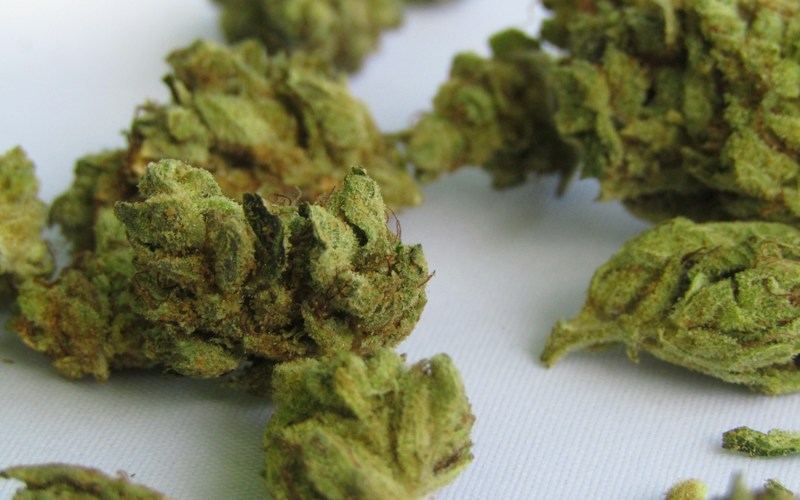
Featured image: Ndispensable via Unsplash. Illustrative cannabis flower; the image is not evidence of microbial contamination.
Keep Exploring
Related Reading
Evaluating Outbreak Testing Methods and Workflow Tradeoffs
A decision framework for public-health outbreak testing, including method comparisons, layered workflows, failure modes, and an actionable laboratory checklist.Read Article
Evaluating Wastewater Testing Methods and Workflow Tradeoffs
A practical framework for comparing wastewater methods, sampling requirements, matrix performance, quality controls, reporting limits, and the full cost…Read Article





Leave a Reply